
Your partner cancels plans again, and you are not sure whether to push gently or step back. You want to help, but whatever you try seems to land wrong. This guide explains how to help someone with anxiety when that person is your partner, including what to say, what to ease off, and how to look after yourself too.
You cannot fix another person’s anxiety, and you do not have to. Your role is to be steady and kind, and to point towards support when your partner is ready.
What anxiety can look like in a relationship
Anxiety in a partner often shows up as worry, avoidance, irritability and repeated questions, rather than obvious fear. Many people also feel it in the body, such as a tight chest, poor sleep or a stomach that never settles.
You might see your partner cancel plans at the last minute, check things again and again, or ask “are you sure?” several times a night. Some partners snap over small things. Others go quiet and pull away.
Anxiety takes different forms, including generalised anxiety, panic attacks, social anxiety and health anxiety. You cannot diagnose your partner, and you do not need to. A GP or registered psychologist can assess what is going on.
It can help to remember that the anxiety is not aimed at you. It is a mind and body stuck on high alert.
How to help someone with anxiety: starting the conversation
Choose a calm moment, say what you have noticed without blame, ask if your partner wants to talk, then listen.
Avoid raising it during a spike or an argument. A walk or a drive can feel gentler than face-to-face talk.
Begin with what you have noticed and how you feel. For example: “I have noticed you seem on edge lately, and I care about you. Would you like to talk about it?” Then let your partner lead. You are there to understand, not to solve.
Small swaps in your wording can change how a conversation feels.
Ask what helps, and agree a plan together
The most useful step is to ask your partner what helps and what does not, then agree on a simple plan while things are calm. Guessing often goes wrong, because anxiety looks different in every person.
If you are wondering how to help someone with anxiety in a practical way, this plan is a good place to start:
- Pick a quiet time, not the middle of a spike.
- Ask, “When you feel anxious, what helps? What makes it worse?”
- Agree on an early sign, such as a word or a text, that tells you your partner could use support.
- Decide what you will do then, such as sitting nearby, taking a short walk, or trying some simple grounding techniques.
- Agree on what you will not do, such as pushing your partner into a situation or taking over their tasks.
- Revisit the plan every few weeks, because needs change.
If panic attacks are part of the picture, it helps to know what a panic attack really feels like, so you can stay steady yourself.
When helping turns into reassurance or accommodation
Reassurance and accommodation feel kind, but over time they can keep anxiety going. The aim is to stay warm while gently stepping back from both.
The reassurance loop
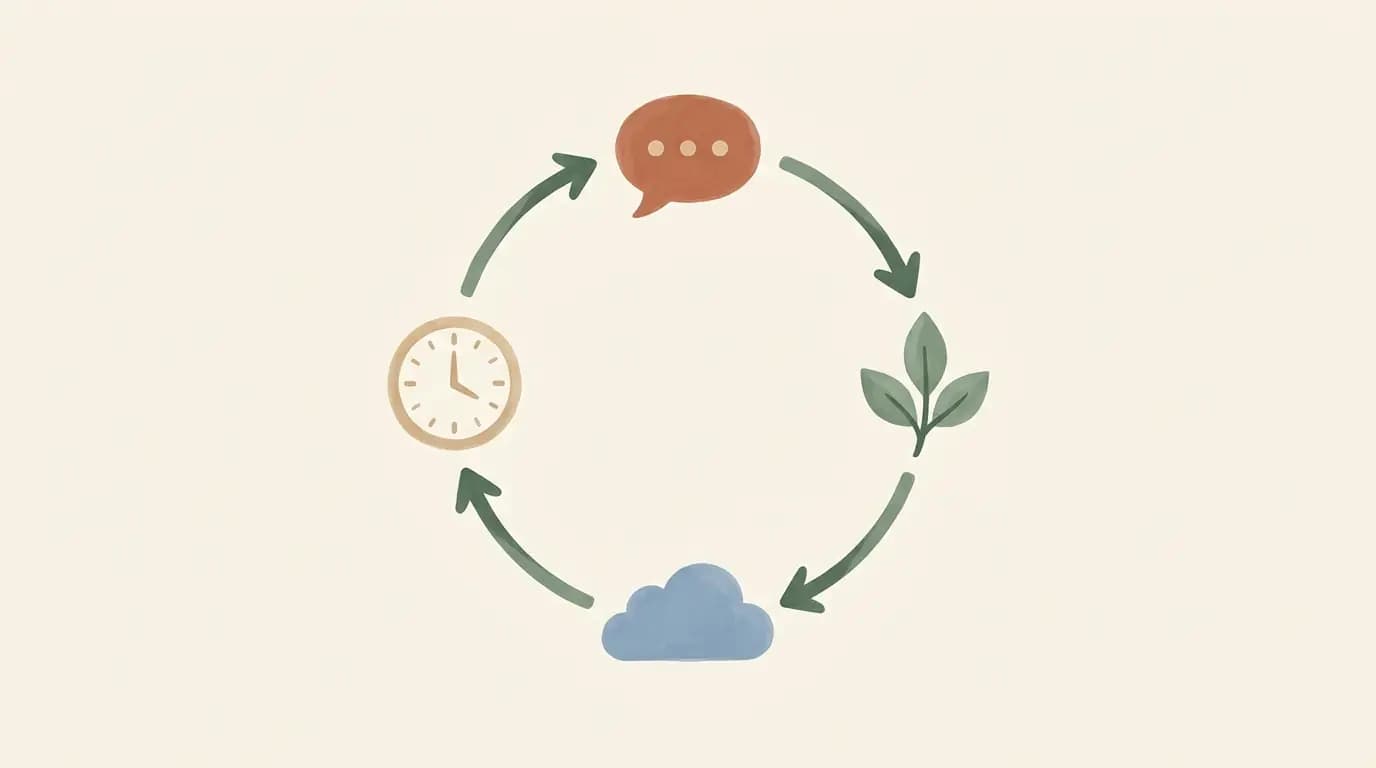
Reassurance seeking means asking others to settle a fear. The answer brings short-term relief, then the doubt returns and the question comes back.
WA Health’s Centre for Clinical Interventions notes that reassurance can ease anxiety briefly but can reinforce it over time, and it encourages compassionate boundaries (Source: Centre for Clinical Interventions, WA Department of Health, 2025). Its free information sheet for carers, family and friends is a useful read.
You might say, “I know this feels scary. I love you, and I don’t think more answers will help right now. Want to sit with it together?”
Accommodation
Accommodation means changing your life around anxiety. You might answer for your partner, avoid certain places, or take over tasks that feel frightening. It comes from love, but it can shrink both your lives. Here is how avoidance feeds anxiety over time.
Change this together, not overnight. Pulling back suddenly can feel like rejection. A psychologist can help your partner plan the change at a pace that suits them.
Encouraging professional support without pushing
Offer to help your partner find support, then leave the decision with them. When you think about how to help someone with anxiety, a GP is a good first step, because they can talk through options and refer on.
Raise it once the conversation is going well: “Would it help to see someone about this? I can help look, or come along and wait with you.” Offer, but do not insist. Booking for your partner can feel like taking control.
Psychological approaches such as Cognitive Behaviour Therapy (CBT) are commonly used for anxiety, and a psychologist can explain what might suit your partner. If medication comes up, that is a conversation for your partner with their GP or psychiatrist.
Support can help, but results vary, and individual circumstances differ. A registered health practitioner can explain what may suit your partner.
If your partner says no, stay kind and try again another day. Mixed feelings about getting help are common.
Looking after yourself and the relationship

Keep your own friends, routines and rest. Your wellbeing matters, and it shapes how you show up for your partner.
Feeling tired, helpless or resentful at times is common. It does not make you a bad partner. Knowing how to help someone with anxiety includes knowing your own limits.
About 3 million Australians (12%) gave informal care in 2022, and only 49% of primary carers reported no unmet need for respite (Source: AIHW, 2025). That figure covers all kinds of caring, and you may not think of yourself as a carer. Still, supporting a partner with anxiety is real work, and the AIHW informal carers report explains the wider picture of how much people give.
Some ways to look after yourself:
- Keep seeing friends and doing things you enjoy, without guilt.
- Call the Beyond Blue support service on 1300 22 4636, which also supports people helping a friend or family member.
- See your own GP if you feel low or worn out.
How to get started in Australia
Start with a GP, who can prepare a Mental Health Care Plan (officially a Mental Health Treatment Plan) and refer your partner to a psychologist. Medicare rebates apply with a plan.
- Your partner books a GP appointment and asks about a Mental Health Care Plan.
- Since 1 November 2025, if your partner is registered with MyMedicare, mental health plans and Better Access referrals generally go through that practice or their usual doctor (Source: Department of Health, Disability and Ageing, 2025). Ask the GP what applies.
- Choose a psychologist. Check their registration on the AHPRA public register, and ask about their approach and fees.
- Go to the first session. Questions are welcome.
- Consider telehealth if travel or anxiety makes in-person visits hard. Some practices offer it across Western Australia.
You can read more on how Medicare Mental Health Care Plans work.
What you can do in sessions
Since 1 March 2023, Medicare has allowed family or carers two Better Access sessions as part of your partner’s course of treatment.
They take place without your partner in the room. They count towards your partner’s allowance and are not treated for you (Source: Department of Health, Disability and Ageing, 2025).
If you would like to talk through your situation with a registered psychologist in East Fremantle, Jacob Jones at Sage Psychological Services is happy to help, in person or by telehealth across Western Australia. Sage is a private billing practice, and Medicare rebates apply with a Mental Health Care Plan.
When it’s more than everyday anxiety
Get help sooner if anxiety is taking over daily life, or if your partner’s wellbeing worries you.
If your partner talks about self-harm or not wanting to be here, take it seriously, stay with them and call Lifeline on 13 11 14. If they are in immediate danger, call 000.
Anxiety can strain a relationship, but it is never a reason for anyone to hurt or control you. If you are afraid of your partner, call 1800RESPECT on 1800 737 732.
Frequently asked questions
- Start with something simple and warm, such as “That sounds really hard, and I’m here.” Name the feeling, then ask what would help. Avoid lines like “just relax” or “calm down”. You do not need perfect words. Listening, a steady voice and patience often matter more than advice.
- Try to avoid dismissing lines like “just relax”, “you worry too much” or “there’s nothing to be scared of”. Avoid promises you cannot keep, such as “everything will be fine”. These can leave your partner feeling unheard. Acknowledging the feeling first usually goes better.
- You cannot control your partner’s feelings, but you can stay steady and offer support. Speak slowly, sit nearby and ask what helps. Simple grounding techniques may help some people in the moment, though results vary. If anxiety is frequent or intense, a GP or registered psychologist can help.
- Some warmth is natural, but repeating the same reassurance can keep the cycle going over time. Try acknowledging the feeling, saying you care, and gently skipping the repeated answers. Change this together, because stepping back suddenly can feel like rejection. A psychologist can help your partner plan it.
- Stay kind, avoid ultimatums, and try again another time. Ask what worries them about seeing someone, since fear of judgement or cost is common. You can offer to help find a GP or psychologist. You cannot make the choice for them, but you can look after yourself in the meantime.
- Possibly. Medicare allows family or carers two Better Access sessions as part of your partner’s treatment. They are held without your partner present, and they are not a treatment for you. Ask your partner’s GP or psychologist whether this suits your situation.
- No. You can support, listen and encourage help, but treating anxiety is work for your partner and their health practitioners. Trying to fix it can leave you exhausted and your partner feeling managed. Your role is to be a caring partner who also looks after yourself.
This article offers general information only and is not a substitute for advice from a registered health practitioner. Results vary, and individual circumstances differ.