

You’ve had headaches for weeks, an unsettled stomach most mornings, and a jaw that aches the moment you wake up. Sleep never feels complete, and none of this feels like the “worry” that anxiety is supposed to cause.
That disconnect is common, because the physical symptoms of anxiety often show up long before any conscious worry does. This article walks through how those symptoms show up in the body, why the body reacts this way, when to see a GP first, and how anxiety is understood and treated in Australia.
When Anxiety Doesn’t Feel Like Worry
Anxiety doesn’t always feel like worry. It can show up first as physical sensations in the body, with no obvious sense of fear behind them.
Anxiety is your body’s stress response doing its job a little too often. It’s meant to prepare you for danger: heart rate rises, muscles tighten, breathing quickens. That’s useful when you need to react fast.
The problem is this response can switch on with no clear threat nearby. If it stays switched on, you notice the physical effects long before you notice any conscious worry. You just feel unwell, tired, or on edge, without knowing why.
This is sometimes called health anxiety, where the physical symptoms become the main source of concern and create a loop: worry about the symptoms makes the symptoms worse.
How the Physical Symptoms of Anxiety Show Up in the Body
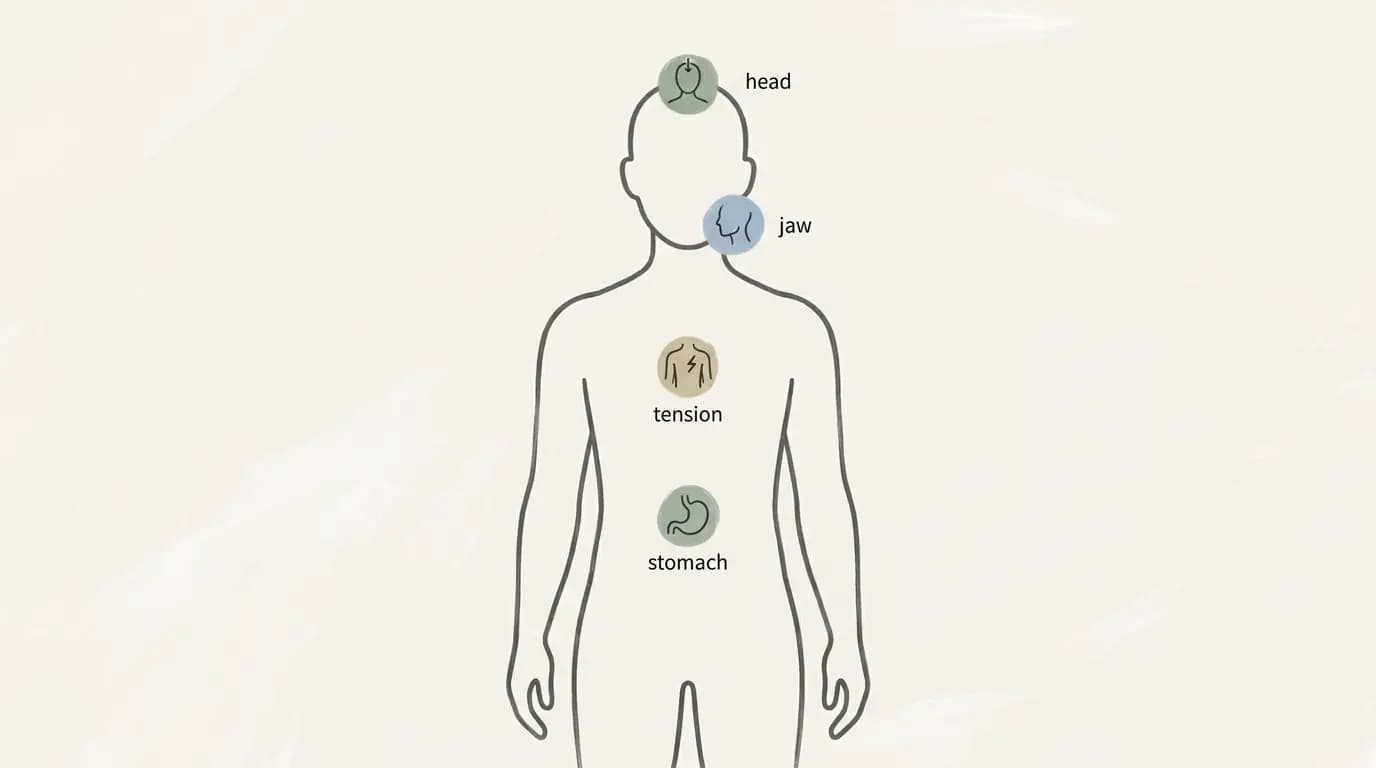
Physical symptoms of anxiety can affect nearly every system in the body, not just the heart and hands. They often turn up in ways people never connect to anxiety at all.
Physical symptoms of anxiety at a glance:
- Racing, pounding, or fluttering heartbeat
- Tightness or pressure in the chest
- Nausea, cramping, or a change in appetite
- Frequent headaches or a tight band feeling around the head
- Jaw clenching or teeth grinding, especially overnight
- Shoulder, neck, or back tension
- Shortness of breath or trouble getting a full breath
- Dizziness or lightheadedness
- Trouble falling asleep, waking often, or waking tired
- Ongoing fatigue with no clear physical cause
- Sweating or hot flushes unrelated to heat or exercise
- Restlessness or a constant sense of being on edge
Heart and Chest
A racing or pounding heart is one of the more alarming physical symptoms of anxiety, mainly because it can feel like something is seriously wrong. Chest tightness often comes from the same stress response, combined with shallow or rapid breathing.
Digestion and Gut
Anxiety and digestion are closely linked through the connection between the gut and the nervous system. This can show up as nausea, cramping, or a stomach that never quite settles, particularly in the mornings.
Muscles, Jaw, and Headaches
Constant low-level muscle tension is common with anxiety, especially through the shoulders, neck, and jaw. Many people only find out they’ve been clenching their jaw overnight when a dentist or GP mentions it.
Sleep and Energy
Anxiety can disrupt sleep even without racing thoughts to point to. You might fall asleep fine and then wake repeatedly, or sleep the full night and still feel drained the next day.
Why the Body Reacts Before the Mind Catches Up
Anxiety symptoms often appear in the body before you consciously register feeling anxious. That’s because the stress response starts in a part of the brain that reacts faster than conscious thought does.
When your brain perceives a threat, real or not, it triggers the sympathetic nervous system. This releases stress hormones such as adrenaline and cortisol, which raise your heart rate, tense your muscles, and sharpen your senses. It’s designed to help you respond to danger quickly, without waiting for you to think it through.
That’s useful in a genuine emergency. The trouble is the same system can activate in response to ongoing stress or unresolved worry, long after any real trigger has passed. Your body stays braced for something that never arrives, and the physical symptoms are often the clearest sign of it.
Anxiety Symptoms vs a Medical Cause: When to See a GP First
If you’re experiencing new or ongoing physical symptoms, see your GP before assuming they’re caused by anxiety. Some symptoms anxiety produces can also signal something else, so a proper check rules that out first.
Why These Symptoms Often Go Unrecognised
These symptoms often go unrecognised because anxiety is common, yet Australians are far less confident recognising its physical signs than they are recognising depression.
Anxiety disorders affected 17.2% of Australians aged 16 to 85 in the 12 months to 2022, the most common mental disorder group in the country. Lifetime prevalence is higher again, at 28.8%. Around 3.4 million Australians live with an anxiety disorder at any given time.
The rise has been sharpest among younger adults. Among 16 to 24 year olds, the proportion experiencing a mental disorder in the past year climbed from 26% in 2007 to almost 39% in 2020–2022, with anxiety the most common condition in that age group. Women report roughly double the 12-month anxiety prevalence of men.
With numbers like these, someone in your workplace, family, or friendship group is likely dealing with exactly the symptoms described here. Many won’t connect them to anxiety until later, often after tests that come back clear.
How Anxiety Is Understood and Treated in Australia
Anxiety is generally treated with evidence-based psychological therapy, sometimes alongside support from a GP or psychiatrist depending on what a person needs.
CBT is identified as a first-line treatment for anxiety in Australasian clinical guidelines, including for panic disorder and agoraphobia. It works by helping you identify the thought and behaviour patterns that keep the stress response switched on, and building practical strategies to settle both mind and body.
Where anxiety is connected to past experiences or trauma, a psychologist such as Jacob Jones, registered psychologist may also draw on approaches such as Eye Movement Desensitisation and Reprocessing, known as EMDR, or psychodynamic work that looks at underlying drivers rather than symptoms alone. You can read more about anxiety therapy approaches in Perth.
If medication is relevant to your situation, that’s a conversation for your GP or a psychiatrist, not something a psychologist can prescribe or a blog post can advise on.
Results vary and individual circumstances differ. Therapy isn’t about eliminating every worry, since no one can promise that. It’s about changing your relationship with anxiety so it has less hold over your day. If you’re unsure what would help, a registered psychologist or your GP is the right person to ask.
Getting Started: GP Referral, Medicare, and What Therapy Involves
In Australia, most people access subsidised psychology sessions through a GP-prepared Mental Health Treatment Plan under Medicare’s Better Access initiative.
- See your GP. Book a longer appointment and explain what you’ve been experiencing, physical symptoms included.
- Get your Mental Health Treatment Plan and referral. Your GP assesses your needs and refers you to a psychologist, usually for an initial six sessions.
- Attend your sessions. Medicare provides a rebate for each session with a registered psychologist under a current Mental Health Treatment Plan. The exact rebate amount is set by the Medicare Benefits Schedule and is worth checking directly, as rates are reviewed periodically.
- Return to your GP for a review. After your initial sessions, a review can lead to further sessions, up to 10 individual sessions per calendar year in total.
Fees and rebates vary between practices, so it’s worth checking current fees and Medicare rebate details before your first session. Private health cover, DVA, and NDIS funding may also apply depending on your circumstances. Clients outside East Fremantle can also book an appointment for a telehealth session, or find out more about telehealth psychology across WA.
If you would like to talk through your situation with a registered psychologist in East Fremantle, the team at Sage Psychological Services is happy to help.
Frequently Asked Questions
Yes. The stress response that drives anxiety can activate without a clear emotional trigger you notice. Your body may show signs such as a racing heart, muscle tension, or stomach upset before your mind registers any worry at all. This is common and doesn’t mean something is wrong with you. If it happens often, it’s worth discussing with your GP or a registered psychologist.
Anxiety can cause chest tightness or pain that feels alarming, often linked to muscle tension and rapid, shallow breathing. Because this can resemble a cardiac event, always get sudden or severe chest pain checked urgently. Once a medical cause has been ruled out, ongoing chest tightness linked to stress can be addressed through psychological support.
Common physical signs include a racing or pounding heart, chest tightness, muscle tension, jaw clenching, headaches, digestive upset, dizziness, and disrupted sleep. Symptoms differ from person to person, and not everyone experiences all of them. Persistent or unexplained symptoms are worth raising with your GP.
Anxiety doesn’t always have an obvious trigger. It can build gradually from ongoing stress or unresolved worry that accumulates over time rather than one single event. A GP or psychologist can help you unpack what might be contributing, even when the cause isn’t immediately clear.
Yes. The gut and nervous system are closely connected, so anxiety can affect digestion through nausea, cramping, or appetite changes. This connection is well recognised in general practice. If digestive symptoms are persistent, your GP can check for other causes alongside considering anxiety.
Under Medicare’s Better Access initiative, eligible people can access up to 10 individual psychology sessions per calendar year with a Mental Health Treatment Plan from their GP. Sessions are usually released in an initial block of six, followed by a GP review before further sessions are approved.
A GP referral and Mental Health Treatment Plan are needed to access the Medicare rebate for your sessions. You’re also welcome to see a psychologist privately without a referral, whether you’d simply prefer to pay independently or you’ve already used your rebated sessions for the calendar year.