

If your mind won’t switch off, or worry has started running your day instead of the other way around, you have probably already asked yourself one question: how does CBT work, and could it help someone like you?
Cognitive Behaviour Therapy (CBT) is one of the most studied forms of psychological treatment available, and it is often the first approach a GP or psychologist suggests for anxiety. This article walks through what CBT actually does, why anxious thinking feels so automatic in the first place, what a course of therapy looks like session by session, and what it costs in Australia. By the end, you should have a clear, honest picture of what actually helps, not just a list of buzzwords.
What is CBT, really?

CBT is a structured, practical form of talk therapy based on one simple idea: your thoughts, feelings and behaviours are all connected, and changing one can change the others.
Rather than spending months unpacking your entire life history, CBT tends to focus on what is happening for you right now. You and your psychologist work together to identify the specific thought patterns and behaviours that are keeping a problem in place, then build practical strategies to shift them.
Once you understand how CBT works at this basic level, the rest of therapy tends to make a lot more sense.
The Australian Association for Cognitive and Behaviour Therapy describes CBT as a well-planned therapy that is focused on outcomes, with clear goals and regular check-ins on progress. That structure is part of why it suits anxiety so well. Anxious thinking often feels vague and overwhelming, and CBT gives it a shape you can actually work with.
Why anxious thinking feels so automatic
Anxious thoughts feel automatic because they are, in a sense, well-practised. The more often your mind takes a particular path, such as assuming the worst will happen, the more familiar and effortless that path becomes.
This is sometimes called a cognitive distortion, a pattern of thinking that skews how you interpret a situation. Common examples include catastrophising, all-or-nothing thinking, and assuming you know what other people are thinking without any real evidence.
Avoidance plays a role too. When you avoid something that makes you anxious, you get a rush of relief. That relief feels rewarding, so your brain learns that avoidance works, even though it usually makes the anxiety bigger over time. Understanding this cycle is the first step toward changing it, and it is exactly where CBT begins.
How does CBT work to change anxious patterns?
CBT works by teaching you to notice unhelpful thought patterns as they happen, test how accurate they really are, and gradually build new, more balanced ways of responding. Two techniques do most of the work: cognitive restructuring and gradual exposure.
Cognitive restructuring means taking a distressing thought, writing it down, and honestly weighing up the evidence for and against it. Instead of assuming a thought is true simply because it feels true, you learn to ask what else might explain the situation. Over time, this becomes a habit rather than a conscious effort.
Gradual exposure works alongside this. Rather than avoiding the situations that trigger anxiety, you face them in small, manageable steps, at a pace that suits you. Each time you get through a step without the feared outcome happening, your mind collects a bit of evidence that the situation is more manageable than it felt.
Research using brain imaging has looked at how psychological therapies like CBT relate to changes in activity in areas of the brain involved in threat response and emotional regulation. This is a genuinely interesting area of study, but it is also still developing, and results vary between individuals.
The honest, practical takeaway is simpler: repetition and practice are what make new patterns stick, in much the same way that practising any skill makes it feel more natural over time.
What a typical course of CBT looks like
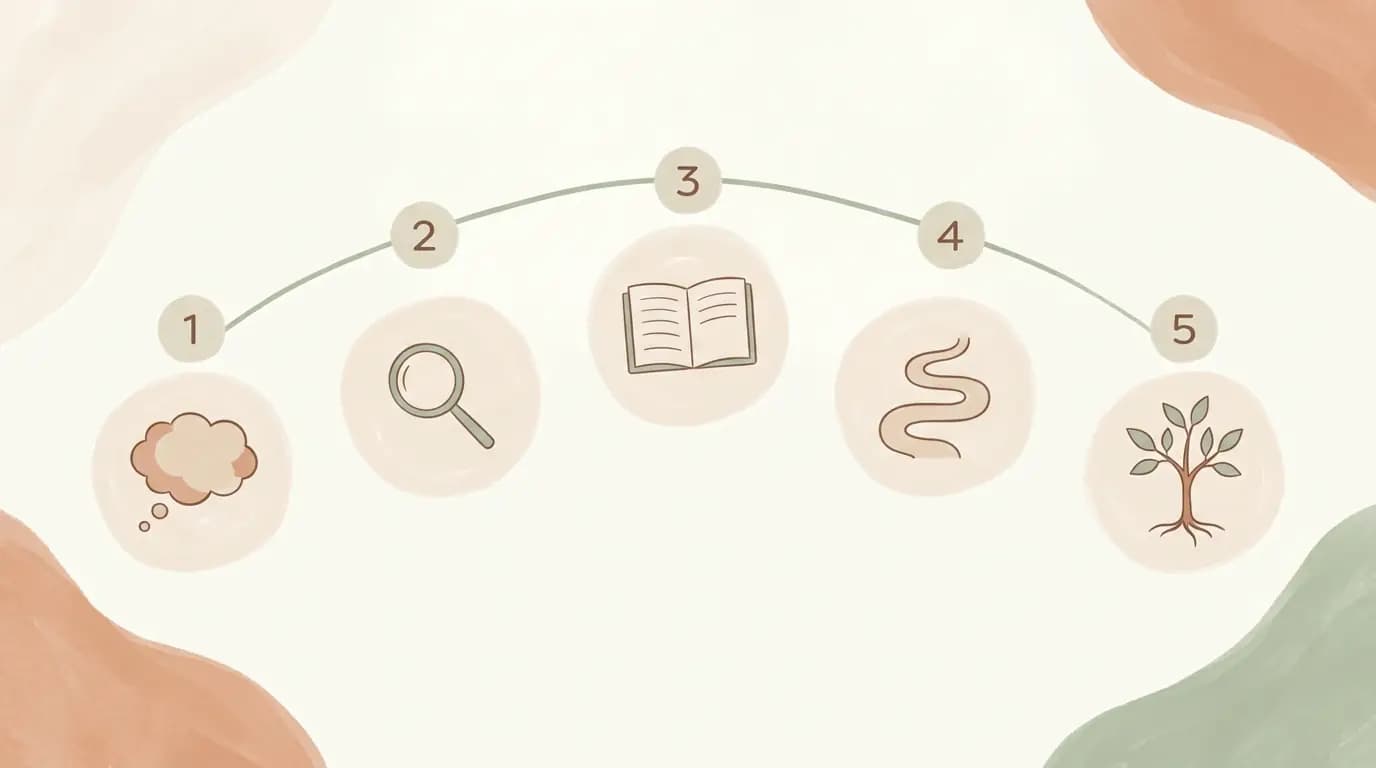
CBT usually follows a similar shape from person to person, even though the details are shaped around your own situation. A typical course involves:
- Understanding the link between your thoughts, feelings and behaviours, and how they interact for you specifically.
- Identifying the patterns that are keeping the difficulty in place, such as avoidance, rumination or particular cognitive distortions.
- Learning practical strategies, such as a thought diary or relaxation techniques, and practising them between sessions.
- Gradually facing avoided situations in a structured, paced way, rather than all at once.
- Building lasting skills so you can manage setbacks on your own after therapy ends.
Many people work within Medicare’s funded allocation of up to 10 sessions in a calendar year, though some need more support and others feel ready to finish sooner. Results vary and individual circumstances differ, so it is worth discussing likely timeframes with your own psychologist rather than assuming a fixed number applies to you.
Is CBT backed by evidence in Australia?
Yes. CBT is recognised as a first-line treatment for anxiety disorders in Australia, and it underpins the approach used in most GP Mental Health Treatment Plans. So how does CBT work within Australia’s actual mental health system, not just in theory?
Anxiety is, by some distance, the most common mental health concern in the country. An estimated 3.4 million Australians, around 17 per cent of the population, experience an anxiety disorder.
Anxiety disorder prevalence has also risen over time, from 13.8 per cent in 2007 to 17.2 per cent in the 2020 to 2022 period, the largest increase of any disorder group measured. It tends to affect younger adults most, with prevalence around 22 per cent in people aged 15 to 34, compared with 15 per cent in those aged 55 and over.
The system built to respond to this is well used. In 2023 to 2024, around 2.7 million Australians accessed 12.6 million Medicare-subsidised mental health services, with psychologists delivering the largest share under Medicare’s Better Access initiative.
MindSpot, a course of online CBT delivered by Macquarie University and funded by the Department of Health, reports an average 50 per cent reduction in symptoms among people who complete it. This is a program-wide average, not a prediction for any individual.
How much does CBT cost, and does Medicare help?
Medicare can reduce the cost of CBT if you have a GP Mental Health Treatment Plan, though it usually does not make sessions free. The rebate amount depends on which type of psychologist you see.
Your GP refers you for up to 6 sessions at a time. Once those are used, a review with your GP can extend the referral, up to the yearly cap of 10 rebated sessions. After that, further sessions in the same calendar year are billed at the practice’s private fee until the new year begins.
Getting a GP Mental Health Treatment Plan
To access these rebates, you first need a Mental Health Treatment Plan from your GP, sometimes called a Mental Health Care Plan or MHCP. Book a longer GP appointment and mention that you would like to discuss your mental health.
Your GP will talk through what you are experiencing, prepare the plan, and provide a referral, usually addressed to a specific psychologist or left open if you have not chosen one yet. You will need both the plan and the referral before a psychologist can process your Medicare rebate.
Signs it might be worth talking to someone
You do not need to be in crisis to see a psychologist, but a few common signs suggest it is worth having the conversation. You might recognise:
- Persistent, hard-to-control worry about everyday things
- A racing heart, tight chest or restlessness that shows up without an obvious cause
- Trouble sleeping because your mind will not settle
- Avoiding places, people or situations that trigger unease
- A constant sense of being on edge, or difficulty concentrating
If any of this sounds familiar, it does not mean something is wrong with you. It means it might help to talk it through with someone qualified.
CBT at Sage Psychological Services in East Fremantle
Jacob Jones is a registered psychologist working with adults across Fremantle, Melville, Cockburn and the wider Perth area. CBT is one of two core approaches used at the practice, alongside EMDR for trauma, and sessions are delivered one to one rather than through a fixed course.
You see the same psychologist at every appointment, which means your therapy builds on a consistent, ongoing relationship rather than starting over each time. Sessions are available in person in East Fremantle or through telehealth psychology sessions for clients elsewhere in WA, with fee details set out on the fees and rebates page. If you are still working out how CBT works for your own situation, that is exactly the kind of question a first session is for.
If you would like to talk through your situation with a registered psychologist in East Fremantle, the team at Sage Psychological Services is happy to help. You can read more about CBT therapy in Perth or book a session with Jacob directly.
Frequently asked questions
There is no fixed number that applies to everyone. Many people work within Medicare’s allocation of up to 10 sessions a year, though some need more support and others feel ready to finish sooner. Results vary and individual circumstances differ, so it is worth discussing what is likely to suit you with your own psychologist during an early session.
Research suggests that psychological therapies including CBT are associated with changes in brain activity related to emotional regulation, though this is an evolving area of study. This is part of the broader picture, even though brain research in this area is still developing. The more grounded way to think about it is that repeated practice builds new habits of thinking, in the same way that practising any skill changes how automatic it feels over time.
CBT is structured and focused on current thoughts, feelings and behaviours, using specific techniques like cognitive restructuring and exposure. Other approaches, such as EMDR or psychodynamic therapy, may look further into past experiences or use different techniques. Many psychologists, including at Sage, draw on more than one approach depending on what suits you.
Yes, CBT is commonly delivered through telehealth in Australia, and it can be just as accessible as an in-person session for many people. Sage Psychological Services offers telehealth appointments for clients across Western Australia who cannot attend the East Fremantle practice in person.
You do not need a referral to see a psychologist privately, but you do need a GP Mental Health Treatment Plan and referral if you want to claim a Medicare rebate. Speak with your GP about a mental health-focused appointment to arrange this.
CBT helps many people, but it does not suit everyone equally, and results vary between individuals. If progress feels slow, your psychologist may adjust the approach or draw on another evidence-based method, such as EMDR or Acceptance and Commitment Therapy, depending on what is driving your anxiety.